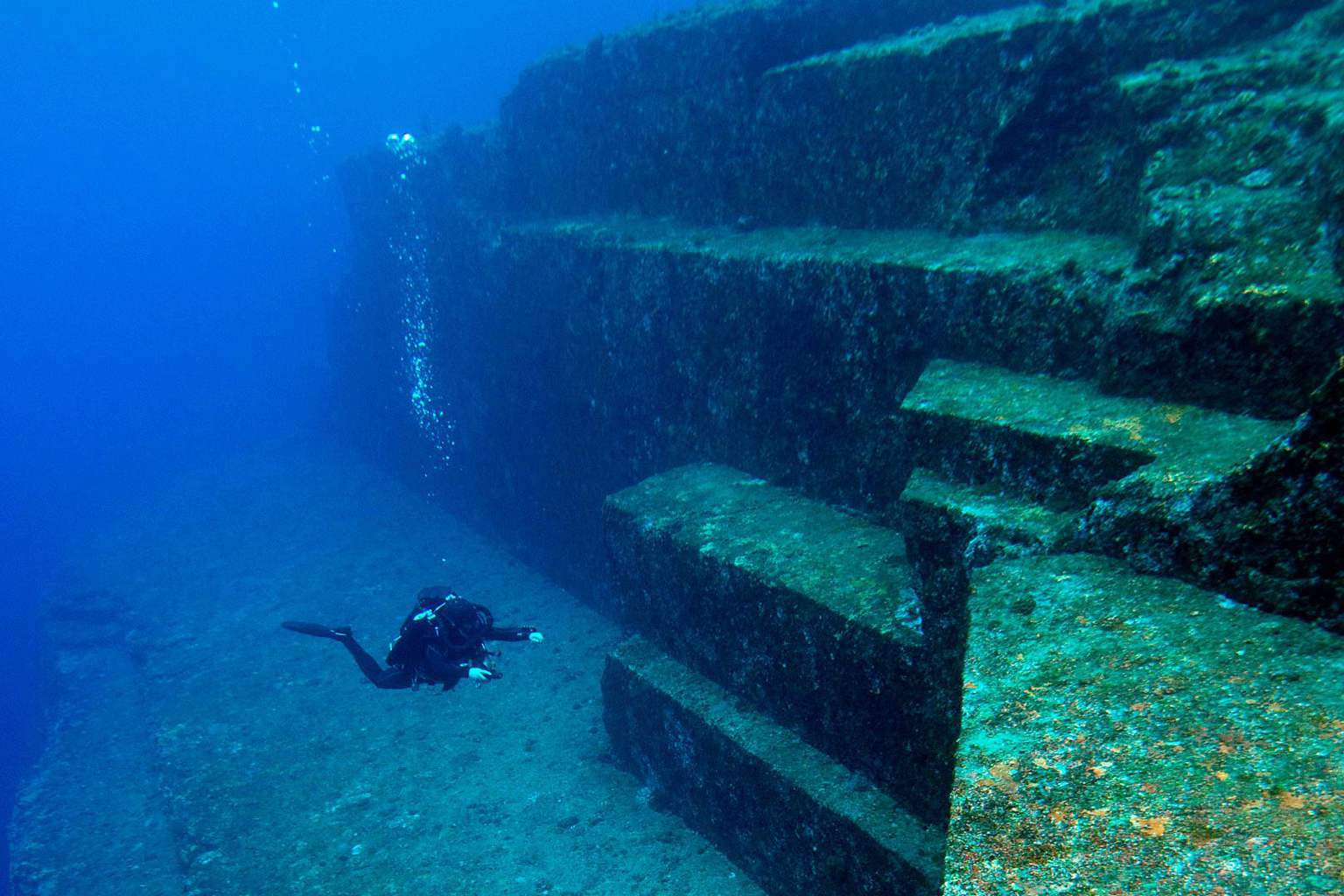
The ocean has always been a place of mystery. Long after ships sail and aircraft fly overhead, the sea quietly keeps its own record of human history. Sometimes, that record is revealed not through dramatic headlines, but through careful exploration by divers who know that every underwater discovery tells a story worth understanding.

One such story involves a group of experienced divers who encountered a sunken aircraft resting calmly on the seafloor. It was not a sudden breaking-news event or a viral mystery. Instead, it was a moment of connection between past and present—between human ambition and nature’s quiet persistence.
This is the story of that discovery, why such planes end up underwater, and what these submerged aircraft mean today.
A Routine Dive That Became Something More
The dive began like many others. Visibility was moderate, currents were manageable, and the team followed a planned descent route off the coast. The location was known for scattered debris and marine life, but nothing extraordinary was expected.
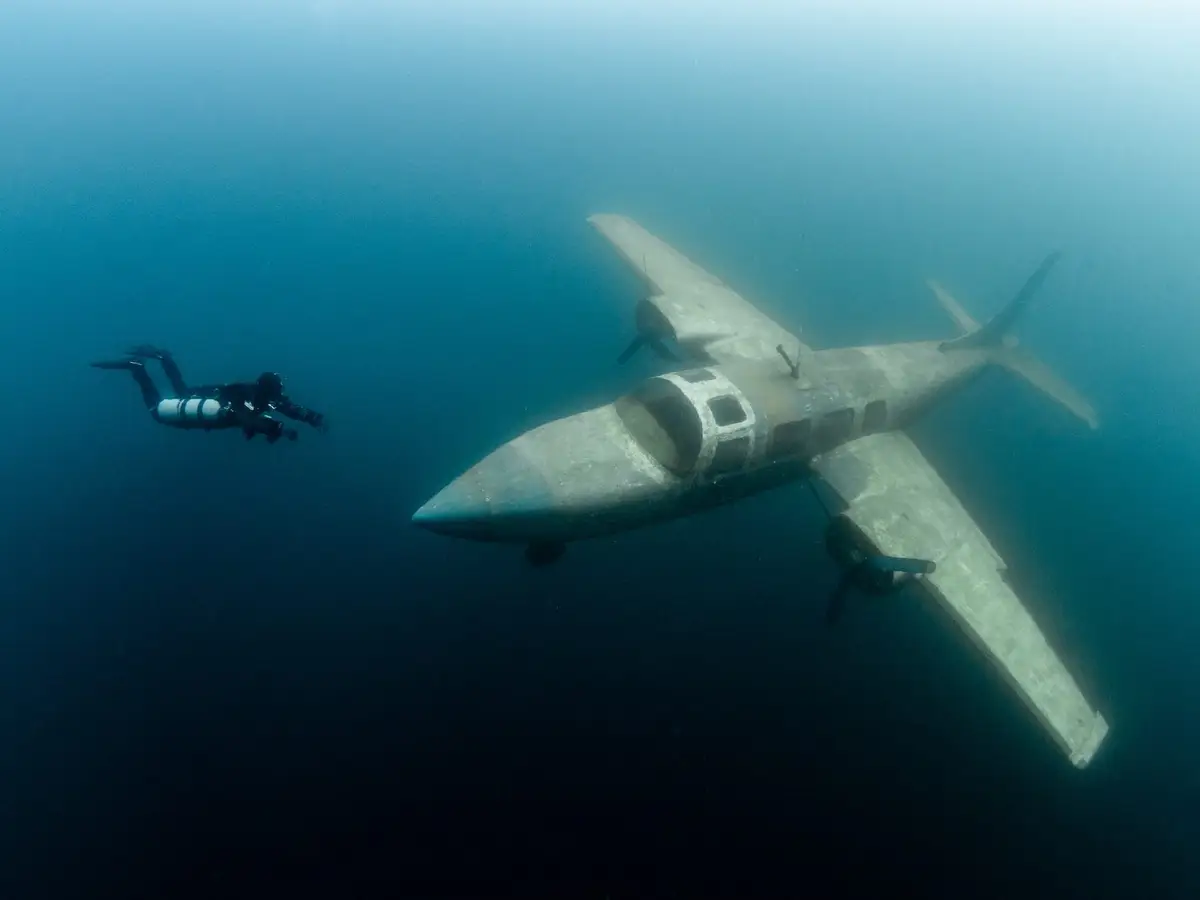
As the divers descended, outlines began to emerge from the blue. At first, it looked like a large metallic shape partially covered in sand. As they approached, the shape became clearer: wings, a fuselage, and a tail section—all unmistakably parts of an aircraft.
The plane rested intact enough to be immediately recognizable, yet weathered enough to show it had been underwater for decades. Coral growth covered sections of the body, fish swam in and out of open compartments, and sediment had softened the once-sharp edges of the metal.
There was no panic, no rush, and no sense of danger. Instead, there was quiet respect.
Identifying the Aircraft
The divers did not touch or disturb the wreck. Following established underwater archaeology and dive ethics, they documented what they saw through photographs and notes.
Later research confirmed that the aircraft was a mid-20th-century military training plane, lost during a routine exercise many decades earlier. Records showed that the pilot had safely exited the aircraft before it went down, meaning there was no loss of life associated with the wreck.
This detail matters. It transforms the discovery from a tragedy into a historical artifact—one that reflects aviation history rather than human loss.

How Planes End Up Underwater
While a sunken plane may seem unusual, it is not rare. Aircraft end up underwater for several reasons:
1. Training and Military Operations
During World War II and the Cold War era, thousands of training flights took place over water. Mechanical failures, fuel issues, or weather conditions sometimes forced emergency water landings.
2. Controlled Ditching
In many cases, pilots deliberately ditched aircraft into water to avoid populated areas or reduce impact damage. If recovery was impractical, the aircraft was left behind.
3. Decommissioned Aircraft
Some planes are intentionally sunk after being stripped of hazardous materials. These become artificial reefs and dive attractions, carefully planned and documented.
4. Accidents with Survivors
Not every aircraft incident involves fatalities. Some planes went down with pilots or crew escaping safely, leaving behind only the machine.
The aircraft discovered by the divers fit squarely into this historical context.
Nature Reclaims the Wreck
One of the most striking aspects of the discovery was how completely nature had adapted the plane into its environment.
Soft corals covered the wings. Small reef fish sheltered inside the cockpit. Algae and marine growth softened the metal surface, blending it into the seafloor.
What was once a symbol of speed and technology had become a habitat.
Marine biologists note that submerged aircraft often function like shipwrecks, providing shelter and breeding grounds for fish and invertebrates. Over time, they support entire micro-ecosystems.
This transformation highlights an important reality: the ocean does not erase history—it repurposes it.
Why Divers Are Drawn to Aircraft Wrecks
For divers, aircraft wrecks offer a unique experience distinct from shipwrecks.
Planes are compact, recognizable, and emotionally resonant. Their shapes are familiar, yet seeing them underwater creates a sense of quiet reflection. Divers often describe such encounters as humbling rather than thrilling.
Unlike treasure hunting or sensational exploration, responsible wreck diving emphasizes observation, preservation, and learning.
In this case, the divers reported the wreck’s location to local authorities and maritime historians to ensure it was properly recorded and protected.
The Importance of Ethical Exploration
Modern diving culture strongly discourages disturbing underwater wrecks. Removing artifacts, damaging structures, or sensationalizing discoveries undermines their historical value.
This discovery followed best practices:
- No objects were removed
- No structural interference occurred
- Documentation was shared responsibly
- The site was left undisturbed
These standards help ensure that future generations—divers, researchers, and historians—can continue to learn from such sites.
Separating Fact from Online Rumors

Stories about sunken planes often appear online in misleading ways. Headlines may imply newly discovered passenger jets or unresolved mysteries, even when the wrecks are long-known historical sites.
In reality:
- Most underwater aircraft are decades old
- Many are already documented
- Most are not linked to missing modern flights
- Many involved no fatalities
This is why context matters. The plane discovered by the divers was not a mystery aircraft, not a secret disappearance, and not part of an unresolved case. It was a known historical loss rediscovered through exploration.
Why These Stories Still Matter
Even without mystery or drama, stories like this matter because they connect us to the past.
Each aircraft represents:
- A chapter in aviation history
- The risks early pilots accepted
- The rapid technological changes of the 20th century
- Humanity’s long relationship with the sea
Underwater wrecks remind us that progress leaves traces—and that those traces deserve care and understanding.
The Quiet Power of Discovery
The divers did not emerge from the water with shocking claims or viral footage. Instead, they shared a measured account of what they had seen, adding one more piece to the broader map of underwater heritage.
In a digital age driven by speed and spectacle, this approach is refreshing.
Discovery does not need exaggeration to be meaningful.
Looking Ahead
As diving technology improves, more underwater sites will be documented, mapped, and studied. Many will involve aircraft, ships, and human-made structures that tell stories beyond headlines.
The goal is not to sensationalize these finds, but to integrate them into a respectful understanding of history.
The sunken plane encountered by these divers now rests quietly, continuing its transformation into reef and record alike.
And that may be the most fitting legacy of all.
Final Thought
Not every discovery needs to change the world to matter.
Sometimes, it simply needs to be seen, understood, and left in peace.