For decades, the depths of the world’s oceans have remained one of humanity’s greatest frontiers. While satellites have mapped distant planets and telescopes have peered into the earliest moments of the universe, much of Earth’s own seabed is still unexplored. From time to time, discoveries beneath the waves capture global attention and ignite debate, raising questions about what we truly know about our planet’s past.

One such mystery lies deep beneath the Caribbean Sea, off the western coast of Cuba. Since the early 2000s, unusual underwater formations discovered in this region have puzzled scientists, inspired speculation, and fueled ongoing discussion about ancient human history. While no definitive conclusions have been reached, the structures remain one of the most intriguing underwater enigmas of modern research.
This article explores what was discovered, how scientists interpret the evidence, why the findings remain controversial, and what future research may reveal—while clearly separating established science from speculation.
The Discovery That Sparked Global Curiosity
In 2001, marine engineer Paulina Zelitsky and her husband, Paul Weinzweig, were conducting surveys of the seafloor near Cuba’s Guanahacabibes Peninsula. Working through their Canadian company, Advanced Digital Communications, the team was using side-scan sonar and sub-bottom profiling equipment. Their original goal was not archaeological—it was to locate shipwrecks that might be associated with Spanish colonial trade routes.
Instead, the sonar images revealed something unexpected.
At depths of approximately 600 to 700 meters (around 2,000 to 2,300 feet), the scans appeared to show geometric shapes arranged in patterns. Rectangular forms, straight lines, and what looked like terraced structures stood out from the surrounding seabed. Some features even appeared pyramid-like in shape.

Zelitsky described the site as “remarkable,” noting that the symmetry and alignment of the formations did not immediately resemble random natural features. The images quickly attracted attention, and soon headlines around the world began referring to a possible “submerged city” beneath the Caribbean.
Why the Structures Raised Questions
The excitement surrounding the discovery was driven largely by one central issue: depth.
At more than 2,000 feet below the surface, the site is far deeper than coastal settlements associated with known ancient civilizations. For such an area to have once been above sea level, dramatic geological changes would have been required.
Sea level during the last Ice Age was significantly lower than today—by roughly 120 meters (about 390 feet) at its lowest point, according to well-established geological data. However, this still falls far short of explaining a site now resting hundreds of meters underwater.
This discrepancy is one of the main reasons many scientists remain skeptical of the idea that the formations represent a human-built city.
Natural Explanations from Geology
Geologists familiar with underwater landscapes point out that the ocean floor is shaped by complex processes over millions of years. Volcanic activity, tectonic movement, erosion, and sedimentation can all produce formations that appear geometric when viewed through sonar imagery.
Basaltic rock formations, in particular, can fracture into angular shapes. Under certain conditions, these fractures can resemble blocks, walls, or terraces. When seen from above, especially in low-resolution images, natural structures can appear surprisingly artificial.
This phenomenon is sometimes linked to pareidolia—the human tendency to perceive familiar patterns where none were intentionally created. Just as people may see faces in clouds or animals in rock formations, the brain can interpret underwater geology as streets or buildings.
Several scientists who reviewed the original sonar images emphasized that without direct visual confirmation and physical samples, it is not possible to determine whether the structures are man-made.
The Limits of the Available Evidence
One of the key challenges in resolving the debate is the lack of follow-up exploration.
The site’s depth makes it difficult and expensive to study. Human divers cannot safely reach such depths, so investigations would require remotely operated vehicles (ROVs) or deep-sea submersibles equipped with high-definition cameras, sonar, and sampling tools.
While brief reconnaissance dives were reportedly conducted in the early 2000s, no comprehensive excavation or material analysis has ever been published in peer-reviewed scientific journals. Without stone samples, tool marks, artifacts, or construction debris, archaeologists cannot confirm human involvement.
As a result, mainstream archaeology does not recognize the site as an ancient city. Instead, it remains classified as an unexplained geological formation pending further evidence.
Why Research Has Progressed Slowly
Many people wonder why such a mysterious site has not been thoroughly explored, especially given advances in underwater technology.
The answer lies largely in cost and logistics.
Deep-sea research missions are extremely expensive. Chartering research vessels, operating submersibles, and employing multidisciplinary teams can cost millions of dollars. Funding agencies tend to prioritize projects with strong preliminary evidence and clear scientific objectives.
Because the Cuban site’s origin remains uncertain and controversial, securing sustained funding has proven difficult. Political considerations, international collaboration requirements, and restricted access to certain maritime zones have also played a role.
As a result, the site has remained largely untouched for over two decades, fueling speculation but yielding few new data points.
Comparisons to Other Underwater Sites
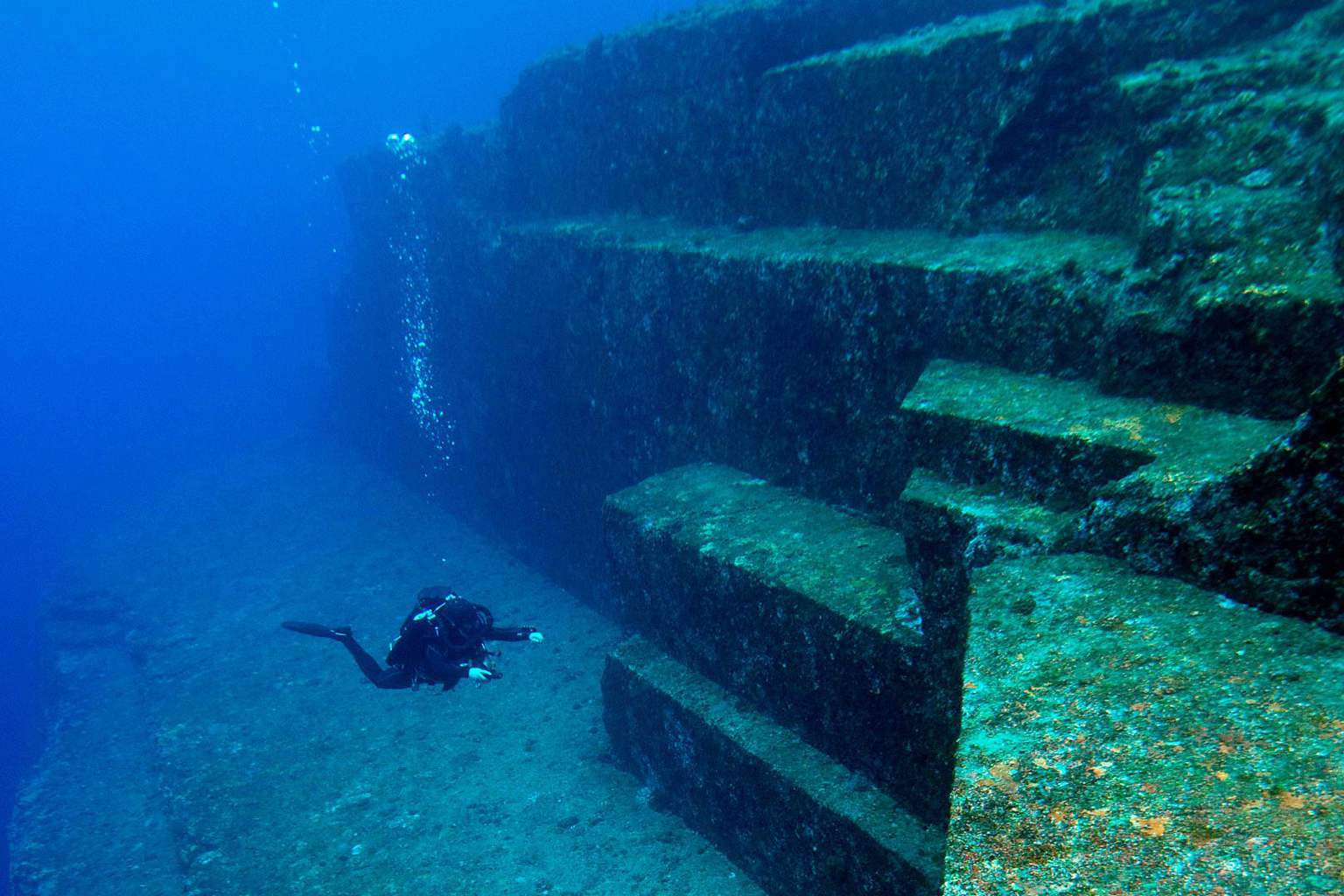
The Cuban formations are often compared to other underwater structures around the world, particularly the Yonaguni Monument near Japan.
Yonaguni consists of massive stone formations with sharp angles and step-like features. Some researchers argue they are natural, while others suggest human modification. After years of study, the scientific community remains divided, though the majority lean toward natural explanations with possible human alteration.
Another frequently cited comparison is Göbekli Tepe in Turkey—not an underwater site, but one that dramatically changed our understanding of early human societies. Dating back over 11,000 years, Göbekli Tepe demonstrated that large-scale monumental construction occurred far earlier than previously thought.

Discoveries like this remind scientists to remain open to revising timelines when credible evidence emerges. However, they also underscore the importance of rigorous excavation, dating, and peer review—standards that the Cuban underwater site has not yet met.
Separating Science from Speculation
Over the years, popular media and online discussions have linked the Cuban site to legendary lost civilizations, including Atlantis. While such ideas capture the imagination, they are not supported by verified archaeological evidence.
Plato’s account of Atlantis, often cited in these discussions, is generally interpreted by scholars as a philosophical allegory rather than a historical record. No physical evidence has ever conclusively linked Atlantis to a real location.
Similarly, claims that advanced civilizations existed in the Caribbean tens of thousands of years ago conflict with current evidence of human migration to the Americas, which places widespread settlement much later.
Responsible scientific inquiry requires acknowledging what is known, what is unknown, and what remains hypothetical.
What Scientists Agree On
Despite differing interpretations, most experts agree on several key points:
- The sonar images show unusual formations that deserve careful study.
- There is currently no physical evidence proving the structures were built by humans.
- Known sea-level changes do not easily explain how a city could end up at such depths.
- Further exploration is technically possible but financially and logistically challenging.
In other words, the site is intriguing, but not yet revolutionary.
How Future Technology Could Help
Advances in oceanographic technology may eventually provide clearer answers.
High-resolution 3D sonar mapping can reveal fine details of underwater structures. Modern ROVs can collect rock samples with precision. Autonomous underwater vehicles (AUVs) can map large areas efficiently.
If future missions obtain samples that show tool marks, quarrying, or construction techniques inconsistent with natural geology, the scientific conversation would change dramatically. Until then, hypotheses about ancient cities must remain speculative.
Why the Mystery Endures
Part of the fascination surrounding the Cuban underwater formations comes from a broader truth: humanity has explored only a fraction of the ocean floor. Vast regions remain unmapped, and new discoveries are made regularly.
Underwater archaeology has already revealed submerged prehistoric landscapes, ancient ports, and coastal settlements that were flooded as sea levels rose after the Ice Age. These finds confirm that valuable chapters of human history lie beneath the sea.
The Cuban site sits at the edge of what we know, reminding us that scientific understanding evolves through evidence, not assumption.
A Cautious but Open Perspective
It is natural to wonder whether our understanding of ancient history is incomplete. In many ways, it is. Archaeology continues to uncover surprises that challenge old models and refine timelines.
However, extraordinary claims require extraordinary evidence. Until such evidence is gathered and independently verified, the submerged structures near Cuba remain an open question—not proof of a lost civilization, but a geological and archaeological puzzle awaiting further study.
Conclusion: Mystery Without Conclusions—For Now
The idea of an ancient city hidden beneath the Caribbean Sea is undeniably compelling. It invites us to imagine forgotten chapters of human history and to reflect on how much of our planet remains unexplored.
At the same time, responsible science demands patience, skepticism, and careful analysis. The underwater formations discovered near Cuba are real, unusual, and worthy of investigation. What they are not—at least based on current evidence—is confirmed proof of an advanced prehistoric civilization.
As technology advances and interest in underwater exploration grows, future researchers may yet uncover new data that clarifies the nature of these structures. Until then, the site stands as a reminder of both the limits of our knowledge and the enduring power of curiosity.
The ocean still holds many secrets. Whether this is one of them remains to be seen.