
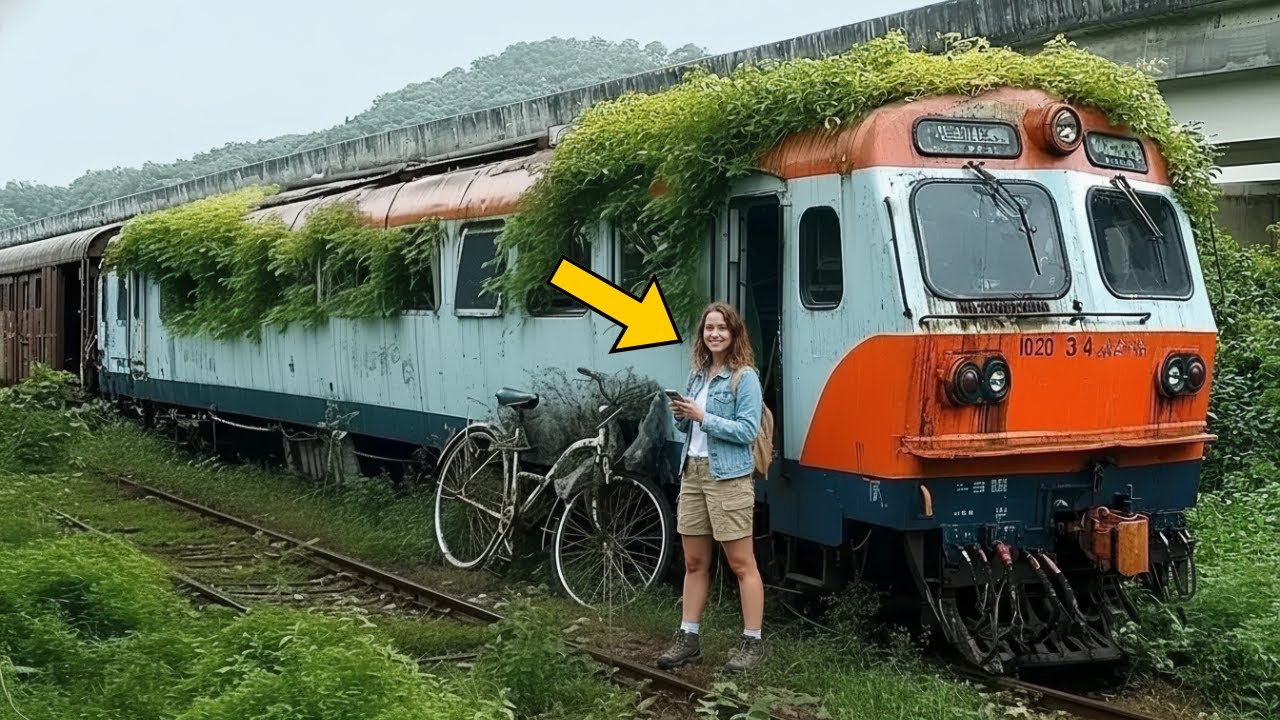
At first glance, the idea of living inside an old train car sounds unrealistic, maybe even a little outrageous. Rusted metal, creaking floors, and decades of wear hardly seem like the foundation for a comfortable life. But for Anne Townsson, what others saw as an unusable relic, she saw as an opportunity. An opportunity not only to create a home, but to rethink what housing can look like in a time when traditional options are becoming increasingly out of reach for many.
Anne’s journey did not begin with luxury or convenience. It began with a forgotten 20th-century train car sitting quietly, weather-beaten and neglected, its best days long behind it. Peeling paint clung to the exterior, broken windows let the wind whistle through, and the interior felt more like a museum of decay than a livable space. Yet, instead of walking away, Anne felt drawn to it.
Her motivation was deeply personal but also widely relatable. Like many people today, Anne was troubled by the worsening housing crisis. Rising costs, limited availability, and the pressure of conventional living pushed her to search for alternatives. Rather than compromise her values or stretch beyond her means, she chose creativity. She chose to imagine something different.

Transforming an old train car into a home is not a project for the faint-hearted. There was no running water, no insulation, and no modern heating system. Every inch of the structure required attention. Anne knew from the beginning that this would not be easy, but difficulty did not discourage her. Instead, it fueled her determination.
The early days of renovation were especially demanding. Before any design choices could be made, the space had to be stripped down to its bare bones. Old fixtures were removed, damaged wood replaced, and structural issues addressed. It was a complete rebuild from the inside out. Progress was slow, and there were moments of doubt, but Anne remained committed to her vision.
What kept her going was the belief that this project represented more than just a place to live. It was a statement. A statement that homes do not need to follow a single blueprint. That comfort and beauty can be created in unconventional spaces. And that old, forgotten structures still have value.
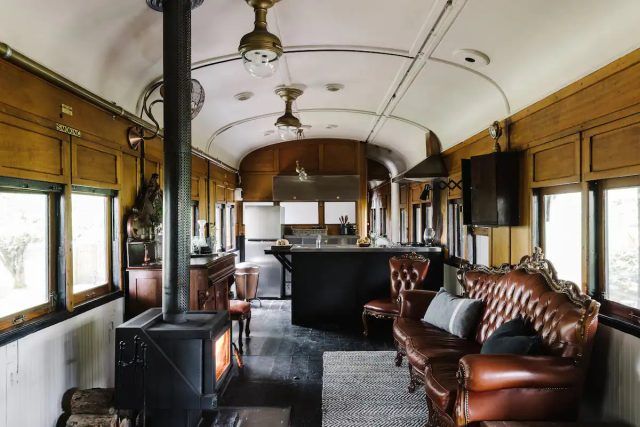
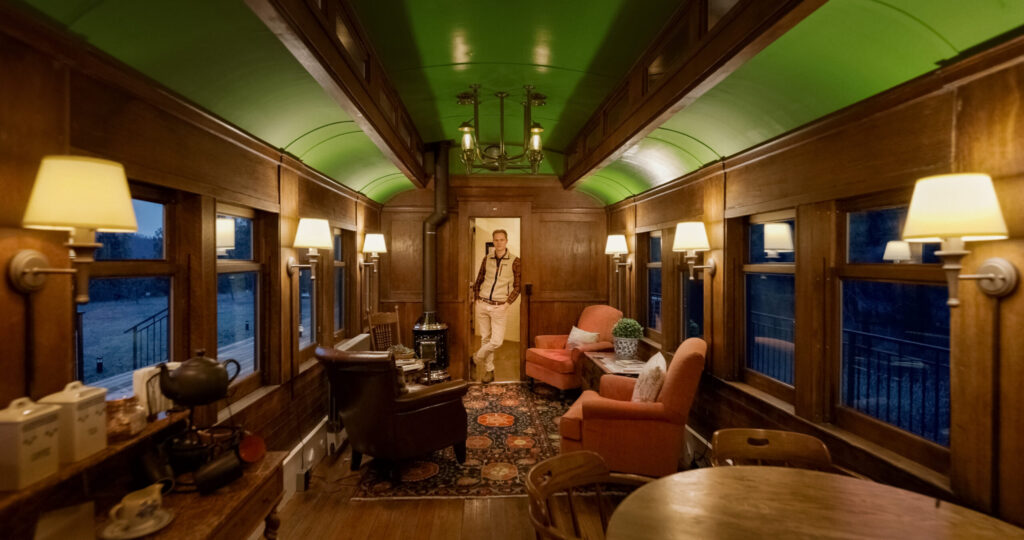
As the months passed, the transformation became undeniable. The train car that once looked abandoned began to glow with new life. Fresh paint replaced rusted surfaces. Custom windows were installed, allowing natural light to pour in and connect the interior to the surrounding countryside. Every decision was made with intention, balancing practicality with warmth.
Despite the limited square footage, Anne managed to create a space that feels open and inviting. Storage was built into walls and furniture. Multi-purpose designs ensured that nothing went to waste. Rather than feeling cramped, the home feels thoughtfully curated, a place where every object has a purpose.

One of the most charming aspects of the train car is its kitchen. Small but efficient, it proves that functionality does not require excess space. The cabinetry was handcrafted by Anne’s granddaughter, Sarah, adding a deeply personal touch to the home. Each cabinet tells a story, not just of craftsmanship, but of family and collaboration.
A small window above the counter frames views of rolling fields and open skies. For Anne, this simple detail transforms daily routines into moments of joy. Cooking becomes an experience rather than a chore, accompanied by natural light and the peaceful rhythm of the outdoors.
The interior design pays homage to the train car’s history without feeling outdated. Polished metal handles, antique-style light fixtures, and subtle vintage accents preserve the character of the original structure. Instead of erasing the past, Anne chose to honor it, blending history with modern comfort.
Outside, Anne added a modest patio at the rear of the train car. This small outdoor space has become one of her favorite places. In the evenings, she sits with a cup of tea, watching the sun dip below the horizon. The simplicity of the moment brings her a sense of contentment that no traditional house ever did.
Living in the train car does come with challenges. Maintenance is constant, and life without certain modern conveniences requires adaptability. But Anne views these challenges as part of the experience rather than obstacles. They remind her of why she chose this path and reinforce her connection to her home.
Many vintage train cars across the world sit abandoned, their stories forgotten. Once symbols of craftsmanship and progress, they are often left to deteriorate. Anne’s project highlights the potential in these structures and raises an important question: how many other forgotten spaces could be given new life?
Preserving historical elements through adaptive reuse is not only environmentally conscious, but culturally meaningful. By transforming the train car instead of demolishing it, Anne preserved a piece of history while meeting a modern need. It is a solution that respects both the past and the future.
Anne does not see her train car as a permanent destination, but as one chapter in a longer journey. She hopes to live there for a few more years, enjoying the peace and fulfillment it brings. Eventually, she dreams of taking on another unconventional project. Perhaps an old boat. Maybe even a retired subway car.
For Anne, the appeal lies in the challenge. Each project is a puzzle, an opportunity to learn, adapt, and create. Her lifestyle reflects a deep curiosity and a willingness to step outside societal norms. It is not about rejecting comfort, but redefining it.
Her story resonates because it speaks to something many people feel but rarely act on. The desire to live more intentionally. To escape rigid expectations. To find solutions that align with personal values rather than external pressure.
In a world where housing is often treated as a commodity, Anne’s train car stands as a reminder that homes are about more than square footage or market value. They are about feeling safe, inspired, and connected to one’s surroundings.
Unconventional living is not for everyone, but Anne’s experience shows that it is possible. With creativity, patience, and determination, even the most unlikely spaces can become places of comfort and beauty.
Her journey encourages us to look differently at what surrounds us. To see potential where others see problems. To question whether the standard path is the only one available.
As housing challenges continue to affect communities around the world, stories like Anne’s offer a glimpse into alternative approaches. They remind us that innovation does not always require new materials or expensive solutions. Sometimes, it begins with reimagining what already exists.

By repurposing an old train car, Anne found not only a home, but a sense of purpose. She created a space that reflects her values, honors history, and challenges assumptions. Her story is not just about where she lives, but how she lives.
In the end, Anne Townsson’s transformation of an abandoned train car into a warm, welcoming home is a powerful example of resilience and imagination. It invites us to reconsider our definitions of success, comfort, and belonging.
Whether it is a train car, a boat, or another forgotten structure, the possibilities for meaningful living are vast. They are limited only by our willingness to embrace the unexpected and see beauty where others do not.
Anne’s home may be unconventional, but the message it carries is universal. Sometimes, the most fulfilling paths are the ones we create ourselves.